EICR and PAT Testing in Golders Green: Expert Electrical Inspections
Electrical safety is one of the most important responsibilities for landlords, homeowners, letting agents and businesses in Golders Green. Whether you manage a rental flat, run a local office, own a shop or want reassurance before buying a property, a qualified Electrician in London can help you understand the condition of both fixed wiring and portable electrical appliances through professional EICR and PAT testing.
An EICR looks at the fixed electrical installation, including wiring, sockets, lighting circuits, earthing, bonding and the consumer unit. PAT testing focuses on portable appliances such as kettles, computers, extension leads, microwaves, printers, lamps and power tools. Together, these inspections give a more complete picture of electrical safety across the property.
Golders Green includes period houses, converted flats, rented homes, shops, offices, community buildings and managed properties. Because many buildings have been altered, extended or rewired in stages, regular electrical inspections can help identify hidden risks before they lead to tripping circuits, damaged equipment, fire risk or non-compliance problems.
EICR and PAT Testing Infographic
Use the infographic below to quickly understand the difference between EICR and PAT testing, who needs these inspections, common issues found and why combining both checks can give a stronger electrical safety overview.
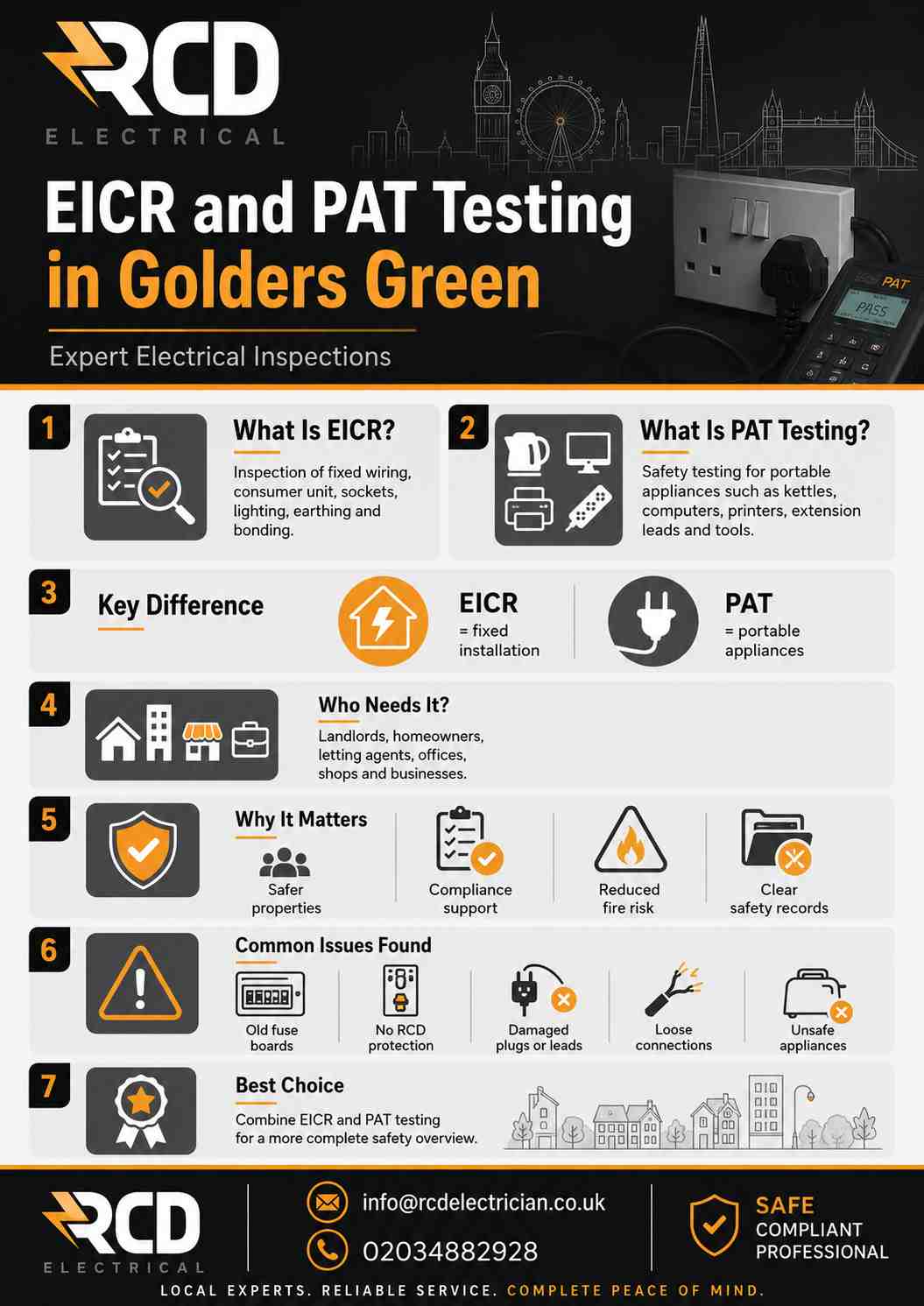 Click to view full infographic
What Is an EICR?
An Electrical Installation Condition Report, known as an EICR, is a formal inspection and test of the fixed electrical installation inside a property. It checks whether the installation is safe for continued use and whether there are defects, deterioration, damage or unsafe alterations that need attention.
The inspection normally covers the consumer unit, circuit protection, fixed wiring, sockets, light fittings, switches, earthing, bonding and other permanent electrical points. It is not just a visual check. A qualified electrician uses professional test equipment to assess the condition of circuits and identify hidden faults that cannot be seen from the outside.
EICR reports are especially important for landlords because rental properties in England require electrical inspection and testing at least every five years by a qualified person. Homeowners may also arrange an EICR when buying, selling, renovating or checking an older property.
- Checks the fixed electrical installation
- Identifies dangerous or potentially dangerous defects
- Reviews consumer unit safety and circuit protection
- Helps landlords demonstrate electrical safety compliance
What Is PAT Testing?
PAT testing, or Portable Appliance Testing, is the inspection and testing of movable electrical equipment. It is commonly used in workplaces, rented properties, offices, shops, schools, salons, community buildings and furnished accommodation where electrical appliances are supplied or used regularly.
A PAT test normally begins with a visual inspection. Many appliance faults are found before electronic testing is even needed. The electrician checks for damaged plugs, frayed flexes, cracked casings, signs of overheating, incorrect fuses, exposed conductors and unsafe extension leads. Suitable equipment may then be tested using a PAT tester to check insulation, earth continuity and other safety requirements.
PAT testing is not always a strict legal requirement by name, but UK duty holders must ensure electrical equipment is maintained to prevent danger. In practical terms, PAT testing is a recognised way to support workplace safety, landlord records and responsible appliance management.
- Kettles, microwaves and kitchen appliances
- Computers, printers and office equipment
- Lamps, extension leads and chargers
- Power tools and portable work equipment
EICR vs PAT Testing: What Is the Difference?
The main difference is that an EICR checks the fixed wiring of the property, while PAT testing checks portable or movable appliances. Both are important, but they look at different parts of the electrical safety picture.
For example, an EICR may identify an old consumer unit, missing RCD protection, damaged socket circuits or poor earthing. PAT testing may identify a damaged kettle lead, an unsafe extension reel, a cracked appliance casing or a faulty plug. A property can pass one type of inspection and still have issues in the other area.
| Inspection Type |
What It Checks |
Typical Use |
| EICR |
Fixed wiring, circuits, sockets, lighting, consumer unit, earthing and bonding |
Rental compliance, property safety, buying, selling or renovation checks |
| PAT Testing |
Portable appliances, plugs, leads, extension cables and movable equipment |
Workplace safety, furnished rentals, offices, shops and appliance records |
When both tests are carried out together, property owners receive a wider safety overview. This can be useful before a new tenancy, after a refurbishment, before opening a business premises or when updating health and safety records.
Who Needs EICR and PAT Testing in Golders Green?
Different people need electrical inspections for different reasons. Landlords often need an EICR for legal compliance, while PAT testing may help show that supplied appliances are being maintained responsibly. Businesses may need appliance testing and fixed wiring checks as part of workplace safety management.
Homeowners may not have the same legal obligations as landlords, but inspections are still useful. If a property has not been checked for many years, has an old fuse box, has had DIY electrical work or shows signs of electrical problems, an inspection can provide valuable peace of mind.
- Landlords preparing a property for new tenants
- Letting agents managing safety documents
- Businesses with portable electrical equipment
- Homeowners concerned about wiring age
- Property buyers checking before completion
- Shops, offices and local commercial units
- HMOs and managed residential buildings
- Furnished rentals with supplied appliances
For mixed-use properties, blocks of flats or commercial units in Golders Green, it is often sensible to plan fixed wiring inspections and appliance checks together so the records are organised and easier to manage.
Landlord and Business Electrical Safety Responsibilities
Landlords in England must ensure that electrical installations in rented properties are inspected and tested at least every five years by a qualified person. The resulting report should be kept and supplied to tenants or local authorities when required. If the report is unsatisfactory, remedial work or further investigation must be arranged properly.
For portable appliances supplied with a rental property, PAT testing is commonly used to demonstrate that appliances have been checked and are being maintained. This is especially relevant for furnished flats, HMOs and properties where tenants use landlord-supplied white goods, lamps or small appliances.
Businesses also have a duty to maintain electrical equipment so it does not create danger. The correct approach depends on the type of premises, the appliances used, how often equipment is moved and whether the environment is low risk or higher risk.
RCD Electrical can support landlords, agents and businesses with Electrical Testing Inspection Certification, helping you keep reports, labels and follow-up work organised.
What Happens During EICR and PAT Testing?
During an EICR, the electrician checks the consumer unit, circuit arrangements, protective devices, earthing, bonding and accessible electrical points. Testing may include continuity, insulation resistance, polarity, earth fault loop impedance and RCD testing. The aim is to identify whether the installation is safe for continued use.
During PAT testing, each appliance is inspected visually and, where appropriate, tested electronically. The appliance may be labelled with a pass or fail result, and a record can be provided showing what has been checked. Failed appliances should normally be removed from use until repaired or replaced.
The power may need to be switched off for parts of the EICR. PAT testing can usually be completed appliance by appliance, but equipment may need to be unplugged briefly. Planning access in advance helps the visit run smoothly and reduces disruption for tenants, staff or occupants.
- Consumer unit and circuit inspection
- Fixed wiring electrical testing
- Socket, lighting and bonding checks
- Appliance visual inspections
- Portable appliance electronic testing
- Pass, fail or observation records
Common Electrical Problems Found During Inspections
Electrical inspections often uncover issues that are not obvious during everyday use. A socket may still work even if the wiring behind it is loose. An appliance may power on even if its lead is damaged. A consumer unit may appear tidy while lacking modern protection.
In Golders Green properties, common EICR findings can include old fuse boards, missing RCD protection, damaged accessories, poor DIY additions, inadequate bonding, overloaded circuits and water ingress in external electrics. PAT testing may reveal cracked plugs, damaged flexes, incorrect fuses, overheating, unsafe extension leads or appliances that should be removed from use.
- Old or poorly labelled consumer units
- Damaged sockets, switches or light fittings
- No RCD protection on vulnerable circuits
- Loose connections or heat damage
- Frayed appliance cables
- Unsafe extension leads
- Incorrect plug fuses
- Appliances failing insulation or earth tests
Finding these issues early can reduce fire risk, improve occupant safety and prevent more expensive problems later.
Understanding EICR Reports and PAT Test Results
An EICR uses observation codes to explain the seriousness of any defects. C1 means danger is present and immediate action is needed. C2 means the issue is potentially dangerous and normally requires urgent remedial work. FI means further investigation is required. C3 means improvement is recommended, but the report is not usually unsatisfactory because of a C3 alone.
PAT results are usually more straightforward. An appliance may pass, fail or require further action. A failed appliance should not be used until the problem has been corrected. In many cases, replacing a damaged lead, plug or appliance is safer and more cost-effective than attempting a repair.
| Result |
Meaning |
Action |
| C1 / Fail |
Immediate danger or unsafe appliance |
Stop use and make safe urgently |
| C2 |
Potentially dangerous fixed installation issue |
Arrange remedial work promptly |
| FI |
Further investigation required |
Investigate before safety can be confirmed |
| C3 / Advisory |
Improvement recommended |
Plan improvement where practical |
A clear report should explain the findings in plain English, not just technical terms. This helps landlords, homeowners and businesses understand what must be fixed now and what can be planned for later.
How to Prepare for an Electrical Inspection
Good preparation helps the electrician complete the inspection efficiently. For an EICR, access is needed to the consumer unit, sockets, switches, light fittings and key electrical points. For PAT testing, appliances should be available, plugged in where possible and not hidden behind furniture or locked away.
Tell tenants, staff or occupants in advance that power may be interrupted during testing. Save computer work, avoid running important equipment and make sure access is available to all rooms included in the inspection.
- Clear access to the consumer unit
- Move furniture blocking sockets
- Gather portable appliances for testing
- Provide previous EICR or PAT records if available
- Tell occupants about possible power interruptions
- Share known problems such as tripping or damaged equipment
- Make sure keys are available for all areas
- Keep pets and children away from work areas
Preparation is especially useful for landlords and businesses because it reduces delays and helps ensure the final report is complete and accurate.
Why Choose RCD Electrical for EICR and PAT Testing?
RCD Electrical provides professional inspection, testing and certification services for landlords, homeowners, letting agents and businesses across London. The team can help identify faults, explain results clearly and recommend practical next steps without unnecessary confusion.
Using one electrical company for both EICR and PAT testing can save time and make your safety records easier to manage. It also gives the electrician a fuller view of the property, from fixed wiring to portable equipment.
Alongside testing and certification, RCD Electrical can help with ELECTRICAL SERVICES IN LONDON, including fault finding, repairs, consumer unit checks, remedial work, safety upgrades and emergency support when problems are discovered during inspection.
Electrical safety should not be left until something fails. Whether you are preparing a rental property, managing a business premises or checking an older Golders Green home, experienced London Electricians can provide the inspection, documentation and practical advice you need to keep the property safer and better managed.
Need EICR and PAT Testing in Golders Green?
RCD Electrical can help with fixed wiring inspections, portable appliance testing, landlord reports, business safety checks, remedial electrical work and clear certification across London.
Book a professional inspection today and keep your Golders Green property safer, better documented and ready for continued use.